
Lyophilized Assay Reagent Beads: Turn Your Liquid Assay Into a Room-Temperature Stable Format
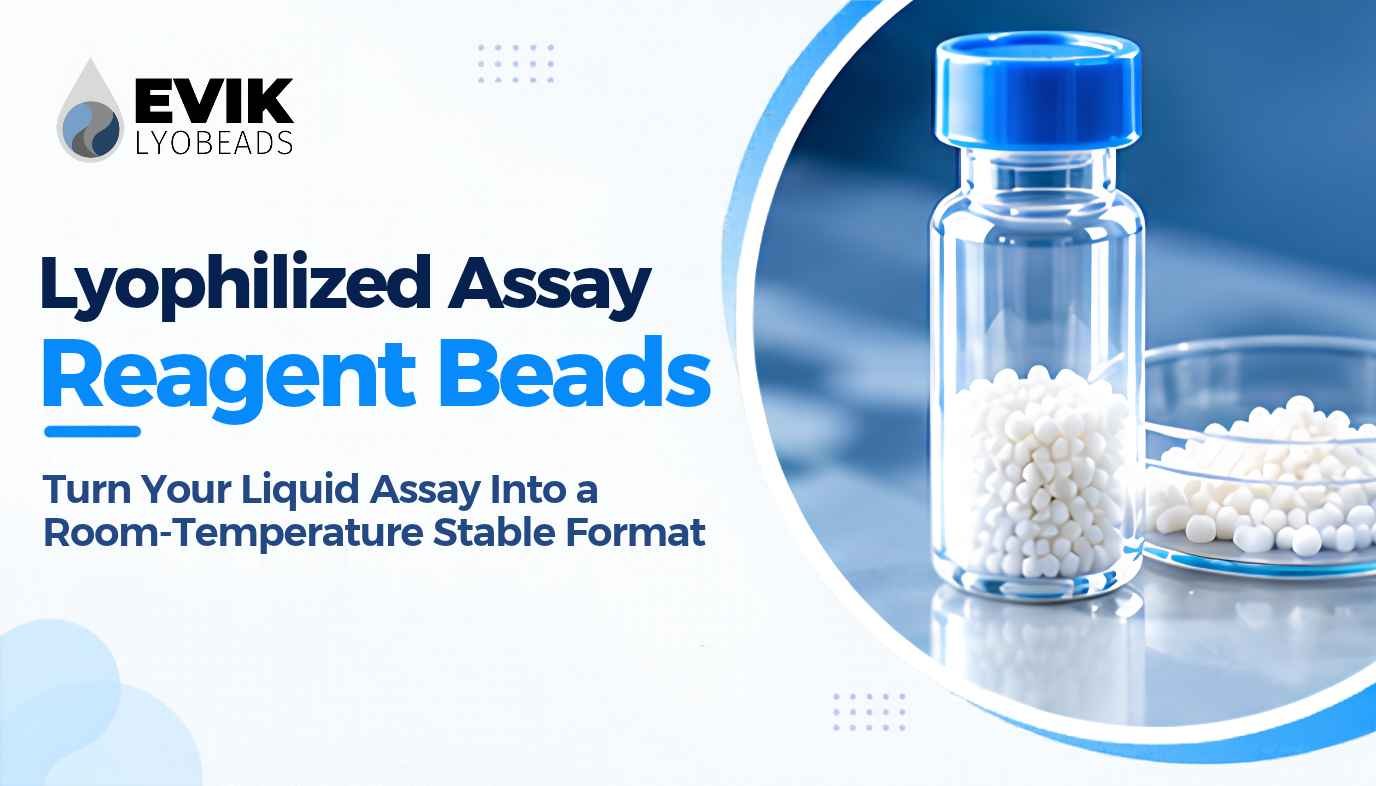
Lyophilized bead handling determines whether a bead performs as designed. A freeze-dried bead can hold a precise dose of reagents or active ingredients in a stable dry format, but only if it stays dry, intact and clean from the moment its pouch is opened until it is dissolved.
At Evik, we manufacture lyophilized beads for diagnostics and skincare, handling them under controlled conditions throughout production and packaging. This guide explains practical ways to protect bead quality in your laboratory or production line and how suitable manufacturing and packaging can simplify handling from the start.
Working with lyophilized beads?
Email info@evikdiagnostics.com or contact our technical team for guidance on storage, packaging and handling.
Why Lyophilized Bead Handling Matters
Freeze-drying removes water to help stabilize a formulation, leaving a dry structure that can be sensitive to environmental moisture and mechanical stress. Careless handling can compromise bead quality in three main ways:
Moisture Uptake
Exposure to humid air can cause beads to absorb moisture, potentially leading to sticking, shrinkage, collapse or reduced functional performance.
Mechanical Damage
Rough handling can chip or crack a bead, resulting in incomplete dose transfer and inconsistent performance.
Contamination
Unnecessary handling, exposed containers and inadequately cleaned tools can introduce contaminants into a single-use dose.
Inconsistent Results
Moisture exposure, damaged beads and inconsistent reconstitution conditions can affect repeatability in laboratory and production workflows.
That is why we assess residual moisture, bead dimensions and mechanical properties against applicable product specifications. Appropriate handling at your end helps preserve bead quality throughout use.
Rule One: Keep Lyophilized Beads Dry
Moisture is one of the main factors to control when handling freeze-dried beads. The following practices help limit exposure to humid air.
- Keep beads sealed until use. Store them in their original protective packaging with the supplied desiccant, where applicable, until you are ready to use them.
- Avoid condensation. If beads have been stored or shipped cold, allow the sealed pouch to reach the recommended handling temperature before opening.
- Prepare a dry workspace. Work in a suitably controlled environment and minimize the time that the pouch remains open.
- Reseal promptly. Return eligible unused beads to the original packaging with the desiccant and reseal according to the product instructions.
- Follow the storage specification. Our diagnostic lyobeads have a stated shelf life of 24+ months at 15–30°C when stored as labeled. Always check the applicable product documentation.
Lyophilized Bead Handling Best Practices: Step by Step
Use this sequence as a general handling guide, adapting it to the instructions supplied for your specific bead, assay or skincare product.
- Inspect the packaging. Check that the pouch is intact and properly sealed. Do not use products with compromised packaging without first consulting the supplier.
- Equilibrate if required. Allow cold-stored pouches to reach the recommended temperature while remaining sealed, reducing the risk of condensation when opened.
- Prepare the workspace. Arrange clean, dry tools, labeled tubes or cartridges and any required equipment before opening the packaging.
- Transfer gently. Use clean, dry tweezers, forceps or a suitable vacuum pick-up tool. Wear appropriate gloves and avoid touching beads directly.
- Reseal immediately. Close the original packaging with its desiccant, where provided, as soon as the required beads have been removed.
- Reconstitute as directed. Add the specified buffer, sample, water or serum according to the relevant product instructions. Our diagnostic lyobeads are designed to reconstitute in under a minute under specified conditions.
- Record the lot information. Document the lot number and opening date, where applicable, to support traceability and troubleshooting.
Tools and Equipment for Handling Lyophilized Beads
Choosing suitable tools helps minimize contamination, mechanical damage and unnecessary exposure to moisture.
| Tool or Equipment | Purpose | Handling Tip |
|---|---|---|
| Tweezers or forceps | Transfers individual beads between containers. | Keep tools clean, dry and suitable for the bead size. |
| Vacuum pick-up tool | Lifts small or fragile beads while reducing direct mechanical pressure. | Use a suitable pickup setting and compatible contact surface. |
| Desiccator or dry cabinet | Provides controlled storage conditions when appropriate for the product. | Monitor the environment and maintain the desiccant according to its instructions. |
| Hygrometer | Measures relative humidity in the work area. | Monitor humidity against the handling requirements for your product. |
| Anti-static equipment | Helps control static-related bead movement and adhesion to tools. | Use suitable anti-static measures where static interferes with handling. |
| Automated pick-and-place system | Transfers and places beads in repeatable production workflows. | Validate bead geometry, mechanical properties and equipment settings before scale-up. |
Handling Lyophilized Beads in Automated Workflows
At higher production volumes, manual bead handling can become a bottleneck. Consistent bead dimensions and suitable mechanical properties help support reliable movement through automated pick-and-place equipment.
Our standard lyophilized beads measure approximately 2–4 mm across and are assessed for relevant mechanical properties. Suitability for automation depends on the bead formulation, geometry, equipment configuration and process requirements.
We can also supply beads in bulk or place them into vials, tubes, microwell plates, microfluidic cartridges and custom devices, subject to project requirements. Our lyobead automation services support customers looking to integrate bead handling into automated workflows.
Explore EVIK™ DxSpheres, including our Master Mix Beads, to learn more about our diagnostic bead formats.
Scaling up bead handling?
Share your workflow requirements with our technical team at info@evikdiagnostics.com. We can discuss suitable bead formats, packaging and handling options.
Troubleshooting Common Lyophilized Bead Handling Problems
| Problem | Possible Cause | Recommended Action |
|---|---|---|
| Beads sticking together or clumping | Moisture exposure or compromised packaging. | Quarantine affected material, check the packaging and desiccant, and consult the product instructions before use. |
| Shrunken or collapsed beads | Moisture uptake or unsuitable storage conditions. | Do not use visibly compromised beads in critical applications. Review storage conditions and contact the supplier. |
| Chipped or broken beads | Mechanical stress during transfer or transport. | Review the handling tools and transfer technique. Report recurring damage to the supplier. |
| Beads clinging to tools | Static electricity or unsuitable transfer equipment. | Review the workspace and consider compatible anti-static tools or ionization. |
| Slow or incomplete dissolution | Moisture damage, an unsuitable liquid volume or incorrect reconstitution conditions. | Verify the specified liquid, volume, mixing method and handling history. |
| Inconsistent results | Damaged beads, storage deviations or inconsistent processing. | Review lot records, storage history, bead condition and reconstitution procedures. |
Handling Freeze-Dried Skincare Beads
The same moisture-control principles apply to skincare beads, including our EVIK™ LyoPearl single-dose products. Follow the instructions on the specific product packaging.
- Open one dose at a time. Open a single-dose pack immediately before use, following the product directions.
- Keep handling clean. Use clean, dry hands to handle the outer packaging and avoid directly touching the bead.
- Activate as directed. Dissolve the bead in the specified amount of water or serum, where instructed, and apply according to the product directions.
- Do not retain an opened dose. Do not store or reuse an opened or reconstituted single-dose bead unless the product instructions explicitly permit it.
- Store unopened packs correctly. Keep packs sealed and follow the storage conditions on the label.
Explore the EVIK™ LyoPearl lineup or read our guide to freeze-dried single-dose skincare to learn more about this product format.
How Evik Makes Lyophilized Bead Handling Easier
Good handling starts before a bead reaches your workspace. Manufacturing controls, product testing and suitable packaging all contribute to a more reliable handling experience.
Controlled Dry Production
Our ISO 13485:2016-certified facility includes an ultra-low-humidity environment, with specialized dry rooms maintained below 10% relative humidity.
Protective Packaging
We offer protective foil-pouch packaging with desiccant where applicable, with bulk supply and assembly into customer-specified formats.
Product Testing
We assess residual moisture, bead dimensions, mechanical properties and functional performance against applicable project specifications.
Contamination Control
Controlled manufacturing and handling procedures help reduce contamination risks throughout production and packaging.
Documented Shelf Life
Our diagnostic lyobeads have a stated shelf life of 24+ months at 15–30°C when stored according to the product label.
Flexible Supply Formats
Bulk beads and placement into tubes, plates, cartridges or custom devices can be discussed according to your application and production needs.
For a broader overview, read our guide to the features of lyophilized beads. Comparing product formats? See lyophilized beads vs. cakes.
If you are deciding whether to develop freeze-drying capabilities in-house, read our guide to in-house lyophilization vs. outsourcing. Beauty brands can also learn more about our cosmetic CDMO single-dose lyophilized beads format.
Want beads that arrive ready for your workflow?
Contact our technical team or email info@evikdiagnostics.com to discuss packaging, storage and handling requirements.
Frequently Asked Questions
What is the most important rule of lyophilized bead handling?
Keep the beads dry. Leave them sealed in their original packaging with the supplied desiccant, where applicable, until use. Open them in a suitable environment, transfer them quickly and reseal unused beads according to the product instructions.
Why are lyophilized beads sensitive to moisture?
Freeze-drying removes water and creates a dry structure that may absorb moisture from the surrounding air. Depending on the formulation, moisture uptake can affect bead structure, dissolution and functional performance.
How should lyophilized beads be stored?
Keep beads sealed in their original packaging with desiccant where provided, and follow the temperature and storage conditions on the label. Our diagnostic lyobeads have a stated shelf life of 24+ months at 15–30°C when stored as labeled.
Can I touch lyophilized beads by hand?
Avoid directly touching the beads. Use clean, dry tweezers, forceps or a suitable vacuum pick-up tool, together with appropriate gloves and handling procedures. Direct contact can introduce moisture, oils or contaminants.
What happens if lyophilized beads are exposed to humidity?
Depending on the formulation and exposure, beads may stick together, change shape, collapse, dissolve differently or lose functional performance. Follow the product instructions and consult your supplier if beads appear damaged.
Can lyophilized beads be handled by automation?
Yes. Beads with consistent dimensions and suitable mechanical properties can be used with validated automated pick-and-place systems. EVIK can also discuss supplying beads pre-placed into tubes, plates, cartridges or other specified formats.
How quickly do diagnostic lyophilized beads dissolve?
Our diagnostic lyobeads are designed to reconstitute in under a minute under specified conditions. Actual performance depends on the formulation, liquid volume, mixing method and applicable product instructions.
What should I do if my beads are broken or clumped?
Do not automatically use visibly damaged material in critical applications. Check the packaging, storage history and handling conditions, record the affected lot and contact the supplier for guidance.
Get Lyophilized Bead Handling Right From Day One
Proper handling helps protect the quality of every bead you use. Starting with beads that are manufactured under controlled conditions, tested against specifications and packaged for your workflow can simplify handling from the beginning.
To help us recommend the right solution, share:
- Your application, such as an assay, diagnostic device or skincare product
- Your preferred bead size and dose requirements
- Your current storage and handling procedures
- Your packaging or assembly format
- Your estimated production volume and timeline
Contact our technical team or email info@evikdiagnostics.com to discuss your lyophilized bead handling needs.