
Guide · Isothermal Amplification
Lyophilized RT-LAMP and LAMP reagents for isothermal diagnostic assay development
How isothermal amplification enables point-of-care and field-deployed molecular diagnostics without a thermal cycler — and why RT-LAMP reagent beads need specific lyo-validation to survive the freeze-drying stress that Bst polymerase is uniquely sensitive to.
Loop-mediated isothermal amplification with reverse transcription (RT-LAMP) has become one of the most widely adopted alternatives to PCR for point-of-care and field-deployed molecular diagnostics. Its single-temperature amplification eliminates the need for a thermal cycler; its speed — typically 20–40 minutes to result — suits both clinical and field workflows; and its tolerance for crude sample matrices reduces the complexity of upstream sample preparation. For RNA targets, reverse transcription is built into the reaction, making RT-LAMP a single-tube, single-temperature format for detection of viruses, RNA pathogens, and gene expression targets.
RT-LAMP and LAMP — isothermal amplification, briefly
RT-LAMP (reverse transcription loop-mediated isothermal amplification) and LAMP (loop-mediated isothermal amplification) are nucleic acid amplification techniques that operate at a single, constant temperature — typically 60–65°C — using a strand-displacing DNA polymerase (Bst polymerase) and a set of four to six primers that recognise six to eight distinct regions of the target sequence. This multi-primer design provides inherent specificity and drives rapid exponential amplification, typically achieving detection in 20–40 minutes.
The properties that make RT-LAMP particularly suited to lyophilized POC and field diagnostic formats:
No thermal cycler required. Isothermal amplification runs in a simple heating block, water bath, or passive incubator — compatible with field and low-resource settings.
Rapid time-to-result. Typically 20–40 minutes from sample addition to readout.
Multiple readout options. Fluorescence with a real-time reader, colorimetric via a pH-sensitive dye (visual readout, no instrument), or turbidimetric (no dye required).
Tolerance for crude samples. Bst polymerase is relatively tolerant of common sample matrix inhibitors compared with Taq-based PCR.
Single-tube one-step format for RNA targets. Reverse transcription and LAMP amplification proceed simultaneously in a single reaction vessel.
Together these properties make lyophilized RT-LAMP beads particularly well-suited to integration into sealed POC cartridges, lateral-flow-coupled molecular assays, and diagnostic kits for deployment in resource-limited settings — where cold chain logistics, equipment availability, and operator training are all constrained.
RT-LAMP and LAMP assays present a specific freeze-drying challenge that PCR does not. Bst polymerase — the core enzyme of the LAMP reaction — is particularly sensitive to lyophilization stress. Without the right excipient formulation, freeze-drying causes significant loss of Bst activity, resulting in failed amplification on reconstitution. The reverse transcriptases used in one-step RT-LAMP formats face similar lyophilization sensitivity.
A common and costly mistake in lyophilized RT-LAMP assay development is to develop the assay in liquid format first and address freeze-drying compatibility later. In practice, this approach frequently requires complete enzyme re-selection and assay reformulation at the lyophilization stage — because the liquid-format enzyme is not lyo-compatible, and the whole assay must be rebuilt around one that is.
The lyophilization challenge specific to RT-LAMP
Starting RT-LAMP development with a formulation that has already been validated for lyophilization eliminates this risk. The Bst polymerase is lyo-selected, the reverse transcriptase is lyo-compatible, the buffer system supports isothermal amplification post-reconstitution, and the excipient composition protects isothermal amplification enzyme activity through the freeze-drying cycle and through long-term ambient storage.
The measurable advantages of this approach:
Reduced lyophilization risk — Bst and RT enzyme lyo-compatibility is validated before assay development begins.
Compressed timelines — months of enzyme selection and lyo process development reduced to weeks.
Predictable scale-up — the formulation translates directly to manufacturing-scale lyophilization without reformulation.
Earlier cartridge integration — beads can be integrated into prototype cartridges at the development stage, not only at validation.
Why starting with a lyo-validated master mix matters
Starting RT-LAMP development with a formulation that has already been validated for lyophilization eliminates this risk. The Bst polymerase is lyo-selected, the reverse transcriptase is lyo-compatible, the buffer system supports isothermal amplification post-reconstitution, and the excipient composition protects isothermal amplification enzyme activity through the freeze-drying cycle and through long-term ambient storage.
The measurable advantages of this approach:
Reduced lyophilization risk — Bst and RT enzyme lyo-compatibility is validated before assay development begins.
Compressed timelines — months of enzyme selection and lyo process development reduced to weeks.
Predictable scale-up — the formulation translates directly to manufacturing-scale lyophilization without reformulation.
Earlier cartridge integration — beads can be integrated into prototype cartridges at the development stage, not only at validation.
Why starting with a lyo-validated master mix matters
A validated starting point, not a finished assay
EVIK™ RT-LAMP DxSpheres provide a validated lyophilized formulation starting point — a proven lyo-compatible RT-LAMP foundation from which assay-specific optimisation proceeds. They are not a finished assay, and they are not intended to replace assay development.
Every RT-LAMP diagnostic assay target is different, and primer design is the single most critical determinant of assay performance. The four to six primers that define the six to eight target recognition regions must be carefully designed and optimised for each specific target sequence. Primer concentration ratios, magnesium concentration, betaine concentration, incubation temperature, and detection chemistry all need to be optimised for the specific target and sample matrix.
What EVIK™ RT-LAMP DxSpheres change is where that optimisation starts. Instead of beginning with an untested liquid formulation and discovering at the lyophilization stage that the Bst enzyme is not lyo-compatible, development begins with a formulation that has already been validated for lyo stability, bead integrity, and ambient storage — so optimisation effort goes entirely into assay performance, not into solving formulation and lyo process problems.
The result is a shorter, more predictable development pathway from initial RT-LAMP assay concept to a validated, shelf-stable lyophilized diagnostic product ready for cartridge integration or kit assembly.
Technical specifications
For custom formulations — custom detection chemistry, cartridge-integrated formats, or primer-included assay beads for defined targets — contact the Evik Diagnostics team to discuss your assay development project.
Customisation options
EVIK™ RT-LAMP DxSpheres are customisable to fit specific assay development and commercial requirements:
Custom detection chemistry — fluorescent, colorimetric (pH-indicator dye), or turbidimetric readout formats.
Custom reaction volume — standard format; alternative volumes available on request.
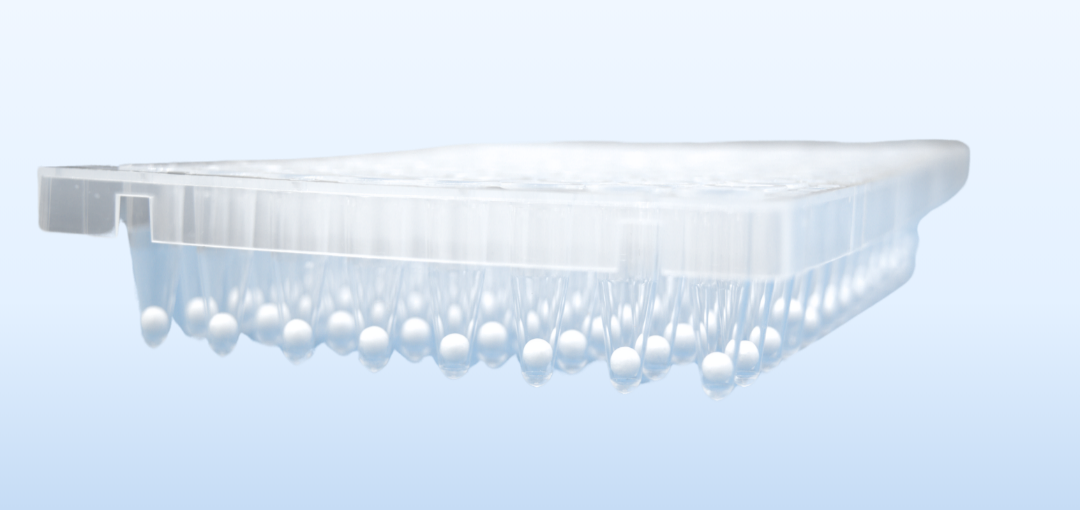
Custom packaging format — tubes, 96-well plates, bulk lyophilization, or cartridge-integrated formats.
Custom excipient formulation — for specific matrix compatibility requirements or cartridge material constraints.
Primers included — fully assembled RT-LAMP assay beads containing validated primers are available for defined target formats.
About the product range. EVIK™ RT-LAMP DxSpheres are part of the EVIK™ DxSpheres product range, developed by Evik Diagnostics — specialists in preformulated lyobeads and lyophilized assay development for molecular diagnostics.
To request a quote, a datasheet, or to discuss a custom formulation, get in touch with our team.
Single-bead per reaction, lyophilized (freeze-dried)
Format
Isothermal — single constant temperature, no thermal cycling
Amplification method
Incubation temperature
60–65°C (assay-specific, determined during primer optimisation)
Lyo-compatible Bst DNA polymerase (large fragment); reverse transcriptase (RT-LAMP format); isothermal reaction buffer; dNTPs; lyophilization excipients
Components included
Components not included
Primers, template (sample)
Fluorescence (real-time reader); colorimetric (pH-sensitive dye, visual readout); turbidimetric (no dye)
Detection options
Time to result
Typically 20–40 minutes (assay-specific, confirmed during development)
Equipment required
Heating block, water bath, or isothermal incubator — no thermal cycler
Reconstitution
Instant — add aqueous primer and sample solution directly to bead
Storage
Ambient temperature — no cold chain required
Shelf life
12–24 months at ambient (product-specific data available on request)
Formats available
Tubes, 96-well plates, custom formats, cartridge-compatible options
RT-LAMP vs LAMP — which format do you need?
EVIK™ RT-LAMP DxSpheres are available in two enzyme configurations, chosen based on whether the target nucleic acid is RNA or DNA.
RT-LAMP format
Enzymes
Bst polymerase + reverse transcriptase
Bst polymerase only
RNA — viruses, RNA pathogens, gene expression targets
Enzymes
Bst polymerase only
Workflow
Single-tube, single-temperature — RT and amplification proceed simultaneously
LAMP format
Workflow
Single-tube, single-temperature amplification of DNA input
Typical samples
Respiratory swabs, blood plasma, saliva, environmental water
Target type
DNA — bacterial pathogens, DNA viruses, genomic DNA
Typical samples
Bacterial cultures, tissue lysates, environmental DNA, extracted genomic DNA
Not sure which format fits your target? Contact the Evik Diagnostics team to discuss target and sample type.